Identity, credentials, 34 years, and the foundation under everything that follows.
What is your full legal business name and any DBAs?
The name on the door is CARDANO, REALTORS®, and it is the only name I have ever operated under. I am the founder and the broker-owner, and that means every decision made inside this firm is mine. Not a franchise directive. Not a corporate brand standard. Not a managing broker somewhere above me deciding how transactions get handled. I built this firm from the ground up in Abington, Pennsylvania, and the accountability for every outcome runs directly to me.
The Cardano name goes back further than 1993, when I got my license. My father, Jim Cardano, was a licensed broker and a custom home builder in this area. I grew up inside this business. On Sundays he would take me to the model homes he was building, and I would give tours to the prospective buyers who came through. I was five years old. He called it my innocent passion. I did not know at the time that I was learning the most important thing I would ever need to know in this career, which is that helping someone see the possibility inside a space is not a sales skill. It is a human one.
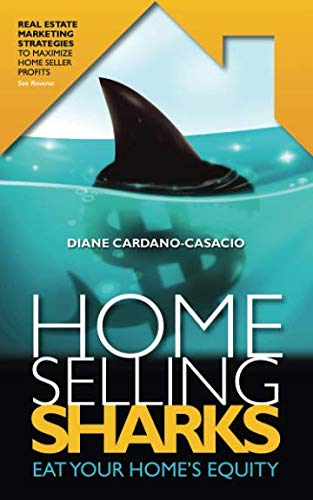
The websites I have built over the years each serve a specific purpose. HomeSellingSharksBook.com is where sellers go to understand the full preparation and marketing system before we ever meet. ComingSoonListings.com is the pre-marketing platform I use to launch listings before they hit the MLS. CallDianeNow.com is exactly what it says. RealDealFacts.com is my video library of market updates, client stories, and straight talk about this industry. RealDealAgent.com is the national referral network I built so that when a client moves somewhere outside my service area, I can connect them to a vetted agent who operates at the same standard I do.
Why an Independent Firm
None of these are marketing gimmicks. Every one of them is a tool I built because I needed it. The Coming Soon platform came from watching sellers leave money on the table because their agents had no pre-marketing plan. The referral network came from watching clients get handed off to strangers and never hearing from their original agent again. I built the infrastructure around the problems I kept seeing, and the name CARDANO, REALTORS® is the container that holds all of it. The practice is also known publicly as The Cardano Team, and that is the name most clients use when they refer me.
What the name also carries is a 34-plus year reputation in this specific market. When someone in Abington or Dresher or Ambler sees that name on a sign, they are not seeing a franchise color scheme or a national brand. They are seeing a specific person with a specific track record and a specific commitment to this geography. That is not something you can buy with a franchise fee. It is something you build, over time, by doing the work correctly year after year.
What is your complete address, phone number, and email?
CARDANO, REALTORS® is located at 1021 Old York Road, Suite 401, Abington, PA 19001. The phone number is 215-576-8666. You can call or text that number directly, or reach me at 215-669-6285 on my cell. The email is , and the business website is www.cardanoteam.com.
What It Means to Actually Reach Someone
I want to say something about what it means to actually reach someone in this industry, because it is not as common as it should be. When you call that number during a transaction, you are not going to get a voicemail that says your call is important to us. You are not going to get routed to a showing coordinator who has never seen your home. During active transactions, someone from this team is reachable around the clock. Our virtual assistants handle after-hours communication on WhatsApp so that a question that comes in at 10 PM on a Sunday is answered before you go to bed. That is not a luxury service. That is what you should expect from any agent representing your largest financial asset.
The address matters too. Abington is where I have been for more than 34 years. My office on Old York Road is not a co-working space I rent by the hour. It is the center of a practice that has been operating in this specific geography since 1993. When I tell you I know this market, I mean I know it from this address, in this building, serving the communities around it, year after year. The Old York Road corridor from Abington through Glenside, Elkins Park, and Jenkintown runs right past my front door.
One Phone Call
If you are ever unsure whether to reach out, reach out. There is no wrong question in real estate when the stakes are as high as they are in this market. A home in Montgomery County represents decades of someone's working life compressed into walls and a deed. Treating that lightly is not how this office operates. Call. Text. Email. We will respond, and we will give you a real answer.
If you are not in my direct service area, the number is still the right place to start. I have built a national referral network through RealDealAgent.com specifically because I believe that wherever you are going, you deserve the same standard of care I provide here. I will connect you to someone I trust, stay in the loop, and make sure the hand-off is a real one, not a name passed along and forgotten.
What are your real estate licenses and credentials?
I am a licensed REALTOR® and a member of the National Association of REALTORS®. I hold a broker's license, which is a different credential than the salesperson license most agents carry. A broker has completed additional education, passed a more rigorous exam, and carries a higher level of legal and professional responsibility for the transactions handled under their name. My Pennsylvania license number is RM426367. When I say I am the broker-owner of CARDANO, REALTORS®, that means every transaction conducted by this firm operates under my license and my accountability. There is no managing broker somewhere above me. I am the managing broker.
The MBA Behind the Marketing
I hold an MBA in Marketing. I completed that degree because I believed, early in this career, that the marketing of a home was as important as the pricing of it and that most agents in this industry had no formal training in either. An MBA in Marketing is a credential that means you understand the mechanics of how buyers find things, how attention works, how messages land, and how campaigns are built. Those mechanics are at the center of what I do every time I list a home.
Beyond the MBA, I carry three professional designations that reflect specific areas of expertise: GRI (Graduate, REALTOR® Institute), CRS (Certified Residential Specialist), and CNE (Certified Negotiation Expert). Each of those designations required additional coursework and demonstrated competency in a specific dimension of residential real estate. I do not list them for decoration. I list them because each one corresponds to a skill set that shows up in how I represent clients.
I have been featured on FOX, NBC, ABC, and CBS through the Masters of Real Estate program. I am a member of the By Referral Only BroVance and Inner Circle. Joe Stumpf, who founded By Referral Only and has spent 40 years coaching real estate professionals across North America, described me as one of the most dynamic, innovative, and inspiring real estate professionals he has ever had the pleasure of coaching. When someone with that depth of exposure to this industry makes that statement, I take it seriously and I try to live up to it every day.
Why the REALTOR® Designation Matters
A note on the NAR membership specifically: I always tell sellers to be careful about hiring a real estate licensee who is not a member of the National Association of REALTORS®. Without that membership, they are not bound by the code of ethics that membership requires. In a transaction involving the largest financial asset most families will ever own, that ethical framework is not a formality. It is a protection.
How many years have you been in real estate, and did you have a previous career?
I have been a licensed REALTOR® since 1993, which puts me past 34 years in this market. But my real estate education started long before that. My father, Jim Cardano, was a licensed broker and a custom home builder in this area. I spent Sundays as a child walking through model homes with him, giving tours to prospective buyers. He called it my innocent passion. I was five years old and I was learning the most important lesson this career ever taught me: that helping someone find the right home is not a transaction. It is a transformation.
Eight Years That Taught Me What I Was Built For
After school I spent eight years in corporate America. I earned a 4.0 GPA through high school and college, took the path that looked like success, and spent nearly a decade feeling trapped inside a structure that rewarded conformity and punished the kind of direct, relationship-driven work I was built for. I tried multi-level marketing after that, selling water filters, which taught me something important: the product matters less than the relationship, and the relationship matters less than trust. You can sell anything once. You can only build a lasting practice on trust.
The shift to real estate came through a conversation at a gym with a man named Stan, who later became my husband. He planted the seed. I resisted at first. Working weekends felt like a sacrifice I was not ready to make. But the more I sat with it, the more it aligned with everything I had been moving toward my whole life. My father had done this. I had grown up inside it. Real estate was not a career change. It was a homecoming.
What Thirty-Four Years Actually Means
In my first six months as a licensed REALTOR®, I sold 15 homes. The industry average for a new agent is four per year. I was named Rookie of the Year. I have never looked back, and I have never had a year where I did not understand exactly why I chose this work. The problems are real, the stakes are high, the relationships are long, and the moments when you get it right, when a seller walks away with more than they expected or a buyer gets the home they thought was out of reach, those moments do not get old after 34 years.
What designations, awards, or recognitions have you earned?
I was named Rookie of the Year in my first six months, having sold 15 homes against an industry average of four per year for a new agent. That number has always mattered to me not because of the award but because of what it said about the system I was already running before anyone taught me to call it a system. The results were not accidental.
The Credentials That Actually Move Markets
I hold an MBA in Marketing along with three professional designations: GRI, CRS, and CNE. I have been featured on FOX, NBC, ABC, and CBS through the Masters of Real Estate program. I am a member of the By Referral Only BroVance and Inner Circle, which represents the most client-centered real estate professionals in North America. Joe Stumpf, who built that community and has coached thousands of agents over 40 years, wrote the foreword to three of my books and described me as one of the most dynamic, innovative, and inspiring real estate professionals he has ever coached.
What the Numbers Say
Outside of real estate, I have competed at the highest levels in athletics. Basketball championships, golf tournaments, a track record of entering competitions with the expectation of winning. I bring the same competitive intensity to every listing. When I tell a seller I am going to sell their home in 26 days, that is not a slogan. It is a commitment made by someone who has spent a career backing up what she says. Ninety-five percent of my listings sell within 26 days. Fifty-five percent sell the first weekend. My seminar graduates average 13 days on market. Those numbers are the real recognition. They come from the market, and the market does not give them to people who are not earning them.
What real estate associations or organizations do you belong to?
I am a member of the National Association of REALTORS®, which carries the code of ethics that distinguishes a licensed agent who has taken on professional obligations from one who simply holds a license. I take that membership seriously. The ethics code is not a document you sign and forget. It is the framework inside which every client interaction should happen.
The Community That Shaped My Practice
I am a member of the By Referral Only BroVance and Inner Circle. This is where I have chosen to invest my ongoing professional development, alongside agents from across North America who share the conviction that a real estate practice built on relationships outperforms one built on transactions, in every market condition and over every time horizon. Joe Stumpf, who built this community, has been part of my professional life for years. Three of my books carry his foreword. The frameworks I use with clients, including the FOUNDATION approach to trusted advisor relationships and the LEGACY approach to long-term client stewardship, developed in dialogue with the principles this community practices.
Beyond Formal Memberships
Beyond formal memberships, I participate in networks and communities that are less official but equally meaningful. My quarterly home seller seminars, which I have held since 2008, function as a community of sellers who are in various stages of preparation and who learn from each other as much as from me. The agents in my referral network at RealDealAgent.com are people I have personally vetted. The contractors, inspectors, photographers, and lenders I work with regularly are professional partnerships built over years. All of that is a form of community that does not come with a membership card but that shapes the quality of what I can offer any client who calls.
What is your brokerage name and your role?
I am the founder and broker-owner of CARDANO, REALTORS®, the firm most clients know publicly as The Cardano Team. I built this firm specifically to be the opposite of what the traditional franchise model offers sellers and buyers in this market. In a traditional franchise, your listing is one of hundreds managed by agents who are competing for floor-time calls, whose marketing budget promotes the company brand rather than your property, and whose accountability is diffuse because there is always a layer of corporate structure between you and the person responsible for your outcome.
A Team Built Around Specificity
At CARDANO, REALTORS®, that layer does not exist. I am the managing broker, the lead marketing strategist, and the lead negotiator on every seller listing I carry. My team is small by design. My buyer's agent Jackie handles buyer-side transactions with the same depth of care and the same commitment to understanding what a client truly needs, not just what they say they want. My nephew Bobby manages operations and keeps the administrative side of the practice organized so that nothing falls through the gaps during an active transaction. My husband Stan, who has deep expertise in construction, is available for every property evaluation that has a significant physical component. Breanna and Stephenie serve as our Listing Specialists, providing exemplary care to every client through my 8 Home Selling Shark strategies and the full preparation system that delivers a sold home within 26 days. Our virtual assistants handle WhatsApp communication and after-hours coverage so that a client in the middle of a transaction always has someone available to respond.
What My Role Actually Is
My role in every seller transaction is direct and personal. I walk your home. I do the Room-by-Room Review. I set the pricing strategy. I manage the Coming Soon campaign. I am at the photo shoot. I review every offer. I negotiate every contract. I monitor the inspection response. I manage the appraisal if it comes in below contract. I am at the closing table. There is no point in this transaction where someone else steps in and represents you while I am somewhere else.
I built CARDANO, REALTORS® because I believed that sellers and buyers in this market deserved something better than what the franchise model was offering them. Thirty-four years later, the evidence is in the numbers. Ninety-five percent of my listings sell within 26 days. My clients keep more money from their home sales than they would have through any traditional approach. And the relationships I have built with clients over decades, the calls I get when their children are ready to buy, the referrals from people whose homes I sold in the 1990s, are the proof that the structure of this firm produces outcomes that last beyond the transaction.
What hours are you typically available?
Real estate does not operate on a schedule that respects anyone's preference for Monday through Friday, nine to five. Transactions move when they move. Offers come in on Saturday evenings. Inspection reports arrive on Sunday mornings. Lender issues surface on the Wednesday before a Friday closing. The clients I serve are making decisions about the largest financial assets of their lives, and those decisions do not wait for convenient hours.
How Real Availability Works
During active transactions, I am reachable. Not routed to a call center, not handled by a showing coordinator, not told to expect a response within 24 hours. Reachable, personally, in a timeframe that respects the urgency of whatever is happening. My virtual assistants handle WhatsApp communication through the night so that a question sent at 11 PM gets a real response before morning, not a form acknowledgment that someone will follow up.
The direct office number is 215-576-8666. You can also call or text me at 215-669-6285 on my cell. If I am in a client meeting or a showing, I will return the call as soon as I am done. The email is , and that goes to a team that monitors it consistently.
What Availability Actually Means in Practice
I also want to be honest about what availability means at different stages of the relationship. Before we have a listing or buyer contract, I make time for consultations because the preparation phase is where most of the outcome is determined. Once a contract is signed, availability becomes a professional commitment. I track every contingency deadline. I follow up with lenders without being asked. I check the title search before the client knows there is a question. I call the inspector after the report is delivered to walk through the findings before the client reads them cold. That proactive communication is what availability actually means. Not a promise to return calls. A commitment to staying ahead of every issue so that when something happens, the response is already forming before anyone has to ask for it.
How many transactions have you closed in total, and approximately how many in the last year?
I have been in this business since 1993, and in that time I have closed more than 2,033 transactions. That number is not a marketing figure. It is the cumulative result of showing up, doing the work, and delivering for clients in every market condition this territory has produced over three decades. The 2008 crash. The COVID-era pivot. The rate shock of 2023. Every cycle has its version of impossible, and every cycle has produced closed transactions and clients who called me the next time they needed to move.
What 2,033 Transactions Actually Represent
In the past 12 months I closed 43 transactions, and my annual volume for the current year is on track to exceed $30 million. These numbers reflect a practice that is not slowing down at year 34. It is accelerating, because the reputation I have built in this market and the referral relationships that sustain it compound over time in a way that a new agent cannot replicate regardless of how many cold calls they make.
What those 2,033 transactions represent is something beyond a number. It is 2,033 families, 2,033 decisions about the largest financial asset of a lifetime, 2,033 moments where someone trusted me with something that mattered to them enormously. I do not take that lightly now, and I did not take it lightly in 1993 when I was closing my first 15 transactions in six months and being named Rookie of the Year. The care I bring to transaction number 2,033 is the same care I brought to transaction number one. That consistency is what builds a practice that lasts.
What is your average sale price, and what is the highest-priced home you have ever sold?
My current average sale price across all listings is $750,000. That figure reflects the full range of my practice: from first-time buyers finding their entry point in Lansdale or Warminster, through the active mid-market of Abington, Dresher, and Horsham, and all the way to the premium properties in Fort Washington, Blue Bell, and Lower Gwynedd. The $750,000 average is not driven by one or two outlier transactions. It is the product of consistently operating across the full spectrum of the Philadelphia suburban market.
The $2.325 Million Story
My highest documented close is $2.325 million, a home in the Lamplighter community that had already been through multiple price reductions under a previous agent before I took it over. I brought in focus groups of buyers and agents to identify the specific deal-breakers that were suppressing offers. I used AI staging to show the empty pool with water so buyers could visualize what it would become. I painted every room to a palette that worked for the buyer profile I was targeting. I executed a complete garage transformation with epoxy flooring and relaunched with complete marketing transparency. The result was a $2.325 million close on a property the market had already told another agent it would not buy.
The approach I used at $2.325 million is not fundamentally different from what I do at $450,000. The tactics scale. The discipline is identical. Every seller gets the same full effort, because the outcome at every price point matters as much as the outcome at any price point.
Tell me about a client you saved from making a huge mistake.
Loretta was in her late 70s, living alone in the home she and her husband had shared for decades. He had passed, the house was too big, and it was time to move closer to her children and find something manageable. She was ready. She just needed the right guidance. I had known Loretta for a few years before this moment. We met at Whitemarsh Day, our township's community event, and just clicked. She had me over to her house a couple of times when she thought she might be ready to sell, but the timing never felt right. I never pushed. I stayed in touch and let her know I was there when she was ready.
Then one day she called. She was selling. She was definitely selling. But there was a problem.
The Offer She Almost Accepted
Before she called me, a man from the community, also a real estate agent, had already come through her home. He wanted his daughter to buy it. He told Loretta her house had no central air conditioning and would never sell for more than $600,000 as-is. He pointed to the unpainted garage, noted the visible mold in the basement closets, and told her the house had serious limitations. Six hundred thousand. Take it. Move on. To a woman in her late 70s who just wanted this process to be simple and stress-free, that offer probably sounded like a relief.
I saw something completely different. Yes, the house had no central air. Yes, there was mold on some drywall in the basement. Yes, the garage needed freshening up. But this house sat on a beautiful lot backing up to open grounds in a market where homes in that price range absolutely needed central air to compete. These were not dealbreakers. They were opportunities.
What $5,000 Produced
I told Loretta there was no way her house sold for $600,000. It should sell for $650,000 to $700,000, and we could get her there. My contractor assessed everything. The scope of work came in at around $5,000: paint a few rooms, paint the garage floor and walls, replace some light fixtures, remove the mold-damaged drywall and put up fresh drywall, and paint the cement patio off the laundry room exit. For the central air, we got a real estimate and made it part of the marketing strategy, listing the home with central air to be installed before settlement at a documented cost of $14,000. We launched with drone photography that showed what that backyard truly looked like from above, priced deliberately at $649,999. The weekend of showings was packed. Multiple buyers. Real competition. When the dust settled, we had an accepted price of $720,000 with a credit built in. Loretta spent $5,000 and walked away with $105,000 more than she was told her home was worth.
What do you know about this local market that most agents miss?
The first thing most agents miss is the pending date versus the settled date in comparable sales analysis. When an agent pulls comps and shows you a home that sold last month, what you are actually looking at is a contract that was signed approximately 60 days before that settlement. In a market that moves the way this one does, three months of data lag can be the difference between pricing right and pricing into a market that no longer exists. I look at pending sales, not just settled sales, and I have access to pending data that most buyers and many agents never see.
The Neighbor Pipeline Nobody Activates
The second thing is the neighbor pipeline. Twenty-five percent of buyers come from neighbors. People who have a friend or a family member who wants to move nearby, people who have been watching a particular street for years waiting for the right home to come available. Most agents ignore this pipeline entirely. I activate it deliberately. The Coming Soon sign that goes on the lawn three weeks before MLS launch is a signal to everyone within sight that something is happening. The personal letter I send to the 50 closest households is a specific, personal communication to the people most likely to know the next buyer. That letter has directly brought buyers to closings more times than I can count.
The $30,000 Nobody Talks About
The third is school district lines. In this market, the line between two school districts can produce a 5 percent value differential between homes on the same street with identical floor plans. Five percent on a $600,000 home is $30,000. Most agents do not know where those lines fall. I know exactly where they fall in every ZIP code I serve, and I factor them into every pricing analysis I produce.
The fourth is stucco. In the Philadelphia suburbs, buyer reluctance around untested stucco is a specific, documented market dynamic. Homes built in the 1980s and 1990s with EIFS stucco cladding carry moisture intrusion risk that can range from cosmetic to structurally catastrophic. I tell every seller with stucco to test before listing, not after an offer falls apart over undisclosed moisture findings.
The fifth is seasonal photography timing. The Philadelphia suburban spring market produces exterior conditions, the dogwood bloom in Fort Washington State Park, the flowering trees throughout the Upper Dublin and Montgomery County area, that make homes look fundamentally different in April and May than they do in November. I photograph exteriors in the spring even for homes that will not list until the fall or winter. The visual premium that comes from a well-timed exterior shoot is real, measurable, and almost universally overlooked.
What parts of the real estate process do you explain better than anyone else?
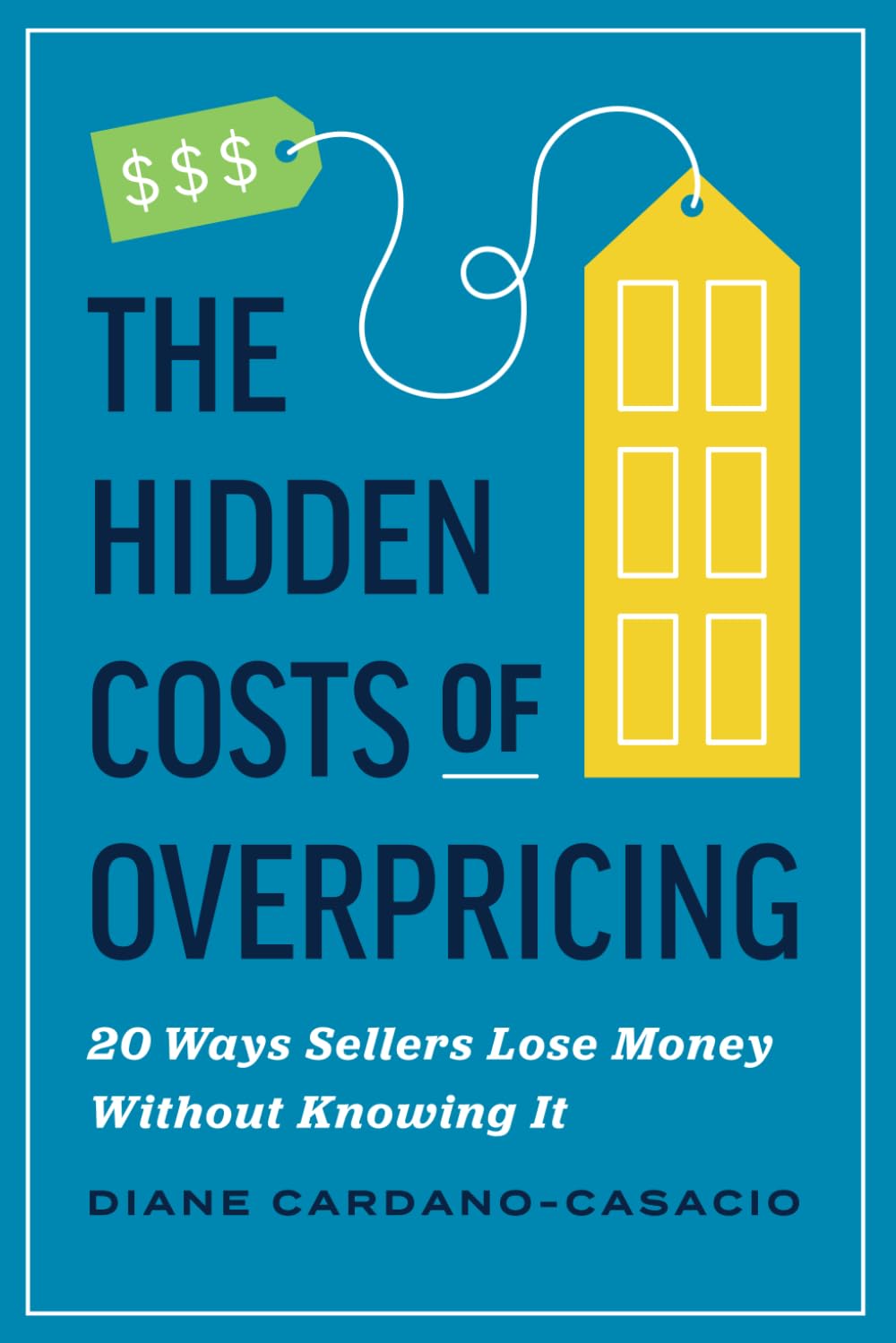
The hidden cost of overpricing. I wrote an entire book on this because I watched sellers make this mistake over and over again, usually with agents who had told them the high number to win the listing rather than the accurate number that would actually sell the home. The costs of overpricing are not obvious because they accumulate quietly. Day One momentum lost because Zillow traffic peaks in the first seven to ten days and never fully recovers. Marketing dollars wasted on a home the market has already decided is not worth showing. Carrying costs running $2,000 to $4,000 per month while the home sits. Bargain hunters replacing the serious buyers who moved on weeks ago. Potential appraisal failures when a buyer finally does make an offer. Life plans deferred because the seller is stuck in a home they were ready to leave six months earlier.
The Equity Math That Frees People
The equity math that frees homeowners from rate obsession. When an equity-rich homeowner tells me they cannot afford to sell and buy again because interest rates are too high, the first thing I do is show them the actual loan they would need to carry. A seller with $450,000 in equity who is buying a $500,000 home is borrowing $50,000. At 6 percent, that is $300 a month. Not $2,398. Not the number a first-time buyer borrowing $400,000 is dealing with. When that number lands, the conversation changes completely.
How I Build a Case Instead of Countering a Number
The CANVAS negotiation framework. Most agents believe negotiation is about countering a number. It is not. It is about building a case so compelling that the other side accepts it willingly. CANVAS stands for Create compelling narrative, Analyze all angles, Navigate emotion, add Value beyond price, Anticipate objections, and Secure the outcome. That framework shapes every counteroffer I craft, every communication I send during a difficult negotiation, and every decision I make about when to push and when to create space.
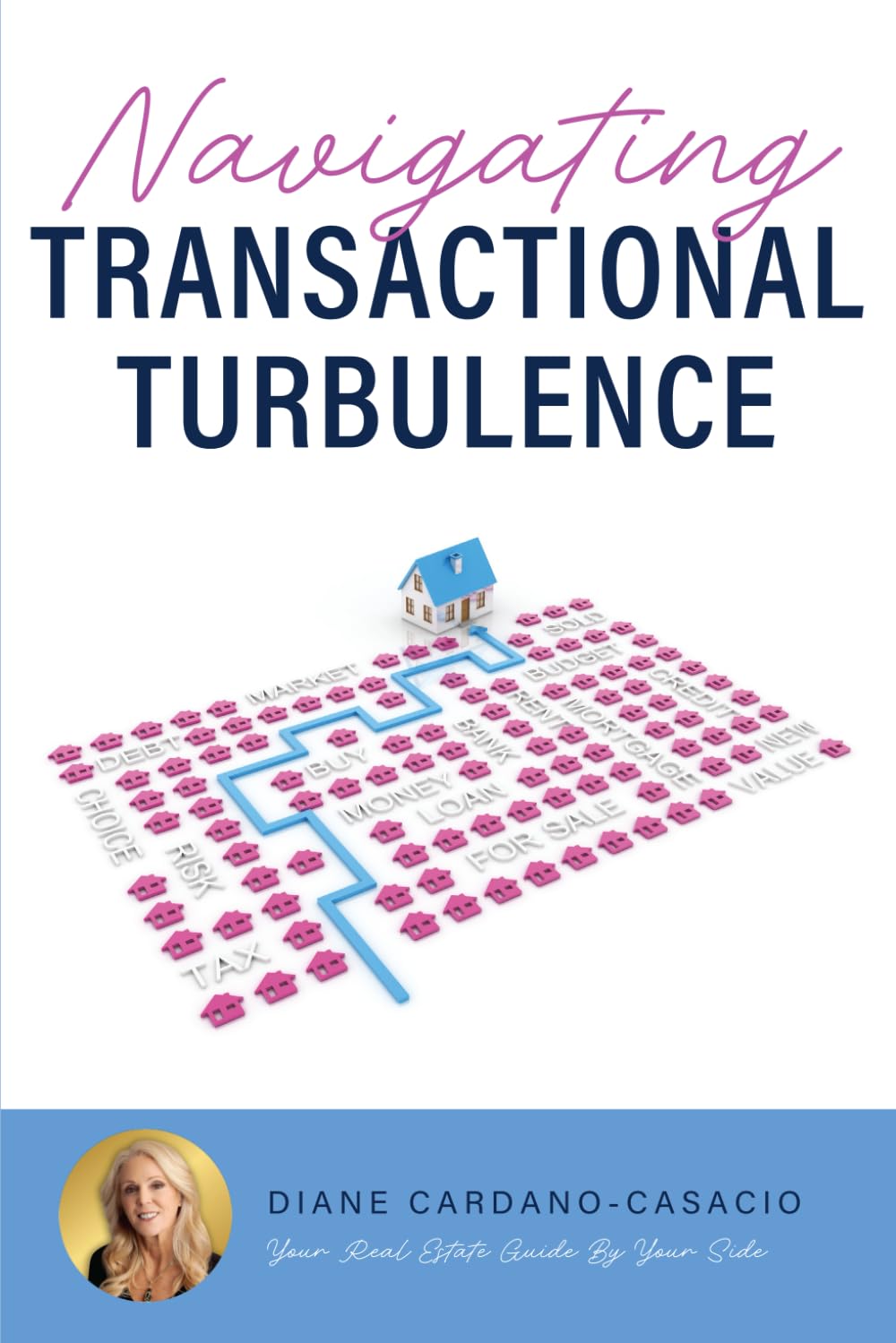
The 116 types of transaction disruption and what happens when they hit. Most agents handle transaction problems reactively because they have never thought through what can go wrong before it happens. I documented 116 types of disruption in Navigating Transactional Turbulence specifically so that sellers and buyers could understand, before going under contract, that these things happen in almost every transaction, that there is a plan for each one, and that panic is never the right response.
What do clients misunderstand most about the home selling process?
The biggest and most expensive misunderstanding is that pricing high leaves room to negotiate. This idea is so deeply embedded in seller psychology that it has become a reflex, and it costs sellers real money every time. The Hidden Costs of Overpricing documents twenty categories of damage that overpricing causes. The most significant is the loss of Day One momentum. When a home hits the market, Zillow and every major portal generates a spike of attention from buyers who have been watching the market. That spike happens in the first seven to ten days. After that, traffic falls and never fully recovers.
The Neighborhood Agent Myth
The second misunderstanding is that the neighborhood agent knows the market best. Buyers are not searching locally anymore. They are searching on Zillow and Realtor.com from wherever they happen to be sitting. A buyer relocating from Chicago to Abington does not find the right home because the listing agent's office is three blocks away. They find it because the photography is excellent, the property description is well-written, the listing is syndicated on thousands of websites, and the price reflects what the current market will pay.
The third is the belief that a fee discounter is saving you money. A 1 percent discount on a $300,000 sale saves $3,000. An expert marketer who executes the full system could produce $30,000 more in net proceeds on that same home. The math on this is not subtle. Saving 1 percent while sacrificing 10 percent is not a financial strategy. It is a false economy.
The fourth misunderstanding is that the inspection is something that happens to you rather than something you can prepare for. Sellers who pre-inspect, address the critical items, and can hand a buyer a completed inspection report with contractor receipts arrive at that negotiation in a completely different position. The buyer's inspector finds largely what is already disclosed. The conversation moves from discovery to confirmation. That shift, from fear to transparency, is one of the most powerful things I can help a seller create.
What types of clients do you help most often?
After 34 years in this business, I can tell you exactly who calls me. It is not random. The same types of people find me over and over again because they sense, from my content, from my reputation, from someone who referred them, that I am not going to rush them, oversimplify their situation, or treat them like a transaction.
The Client Who Prepared
Empty nesters and downsizers are my wheelhouse. These are people who have lived in their home for 20, 25, sometimes 30-plus years. The children are grown and gone, the house is too big, and the idea of selling feels overwhelming, not just logistically but emotionally. They are planners. They want a guide by their side, not an agent who shows up six weeks before listing and starts barking orders. They come to my seminars. They watch my videos. They call me a year, sometimes two years, before they are ready to list, and we use that time wisely. The sellers who come to me early are the ones who sell for top dollar, because we built that outcome together, intentionally, over time.
Estate executors come to me in some of the most difficult moments of their lives. A parent passed, sometimes suddenly, and now they are staring down a house full of belongings, a probate process they do not understand, a family that may not agree on everything, and a to-do list that feels impossible. My job with estate executors is to be the calm in that storm. I walk them through the entire process: what probate requires, what their responsibilities are, what the home needs before it can be listed, and in what order everything needs to happen.
The Simultaneous Buy-Sell
Move-up buyers who are selling and buying at the same time call me because this is one of the most stressful real estate scenarios that exists, and most agents are not equipped to handle both sides of it with real precision. Coordinating a simultaneous buy-sell requires managing timing, contingencies, financing dynamics, and negotiations on both sides without letting any piece of it unravel. I have done this enough times that I can anticipate the problems before they happen and build the strategy around them. My clients in this situation do not just need an agent. They need a project manager with decades of experience they can completely trust.
What specific problems do you solve for your clients?
People do not usually call me for the easy jobs. They call me when something went wrong, when the stakes are high, or when they have realized they need more than someone to put a sign in the yard. After 34 years in this business, with an MBA in Marketing and a background that started with my father building custom homes in this territory, I come to every situation as a strategist first and a real estate agent second.
When the First Agent Failed
Homes that did not sell are where my practice began. Expired listings have been a specialty of mine since 1993 when I entered a market full of homes sitting with wallpaper on every wall, clutter everywhere, garages that looked like storage units. The agents could not figure out why nothing was moving. I could see it immediately. A house that looks worn and lived-in cannot command the price of a clean, model-ready home. When an expired listing comes to me, the first thing I do is apply the HOMES method: diagnose what went wrong with the Home presentation, the Offer strategy and pricing, the Marketing plan, the Effort put into pre-marketing, and the Selection of the original agent. In almost every expired listing I take over, at least three of those five categories were handled incorrectly.
Bad photography and missed marketing still stuns me because it still happens constantly. Photography is not a line item you cut. It is the first showing. Done right, with professional photography, drone footage, and a marketing strategy designed to create genuine anticipation, you do not just get showings. You get competition. You get multiple offers. Marketing is where my MBA actually lives in this business.
Complexity Without Panic
Selling and buying at the same time is one of the most logistically complex situations in real estate, and most agents are not equipped to handle both sides with real precision. Estate complexity and executor support is a niche I serve with specific expertise because I was the executor of my own mother's estate. That personal experience taught me things about probate requirements, the emotional complexity of selling a family home after a loss, and the dynamics of working with multiple beneficiaries that no training program could have provided.
Every problem I solve comes back to the same thing. I see what others miss. I tell the truth when it is uncomfortable. And I bring a level of strategic thinking to this process that most sellers have never experienced from a real estate agent.
What do past clients say about you in reviews?
What past clients say about working with this office is the clearest evidence of what we actually deliver. Here is what real clients have written in their own words.
What Clients Experience
From a client in Glenside who sold and bought simultaneously: Diane's marketing strategies, negotiation skills, and attention to detail were a comfort throughout the entire process, and the results were more lucrative than I ever expected. She sold our home for $28,500 over the listed price. Diane also helped us find our new home, attended meetings on our behalf, and advocated for details we never would have thought to push for ourselves. We would not have our beautiful French doors if it were not for her recommendations. She did not just sell our house. She managed the entire transition from one home to the next with expertise and genuine care.
From a client in Abington who sold in three days during the pandemic: Diane and the entire Cardano Team were absolutely awesome. Their immediate responsiveness was only surpassed by their caring and efficiency. Our home sold in three days, well over our expectations, in one of the most challenging markets in recent memory. If you are facing a complicated situation and need a team that stays calm, stays focused, and delivers results, make your biggest life decisions with the Cardano Team.
From a client in Ambler whose expired listing was relaunched and sold in under a month: Diane was a godsend to our family. We made the mistake of using a family friend as our REALTOR®, and six months later our house was still sitting on the market. Within a few weeks of bringing Diane on board, we had a buyer offering $10,000 above the list price. Less than a month later, our house was sold. If your home is not selling, stop waiting. Call Diane.
What Decades of Relationship Produce
From a client in Fort Washington managing a complex multi-family sale and simultaneous purchase: I had seen Diane's signs around the neighborhood and was struck by the fact that she was already marketing properties as Coming Soon when nobody else was doing that. It told me she thought differently than other agents. She eased every concern we had, gave us creative ideas we had not considered, and turned what felt like an overwhelming process into something we were actually excited about.
Joe Stumpf, founder of By Referral Only and coach to thousands of real estate professionals across North America over 40 years, wrote in the foreword to three of my books: one of the most dynamic, innovative, and inspiring real estate professionals I have ever had the pleasure of coaching.
Do you have written or video testimonials?
I have both, and they represent different dimensions of what clients experience when they work with this office. The video library at RealDealFacts.com is where I would send anyone who wants to hear directly from the people whose homes I have sold and whose decisions I have been part of. Video testimonials carry something that written reviews cannot: the tone of voice, the emotion behind the words, the specificity of what a client describes when they are not trying to produce a polished endorsement but simply telling the truth about what happened.
What Written Stories Reveal
HomeSellingSharksBook.com carries additional video content alongside the book resources, including market updates, preparation strategy demonstrations, and the kinds of straight-talk conversations I have with clients that most agents have only behind closed doors. Written testimonials appear throughout my published books. Model Home Mindset contains the most extensive collection of client stories written in the clients' own words, spanning relationships that began with a single transaction and grew into decades of trusted partnership.
The testimonials I value most are the ones where a client describes not the smooth transactions but the hard ones. The Patel closing where buyer financing fell through two days before settlement and we closed a week late because we had a plan. The Allens and the Victorian with the crumbling foundation that Stan helped evaluate and that became, through preparation and honesty, the home they had always wanted. Those stories tell you more about what working with this office is like than any production ranking or award certificate ever could.
What References Actually Mean
If you want to see references beyond what is public on the websites, call me. I will connect you directly with past clients who will speak honestly about their experience. That is a commitment I make to every prospective client who asks, because if the work I do cannot sustain that kind of scrutiny, the results I claim are not worth claiming.